




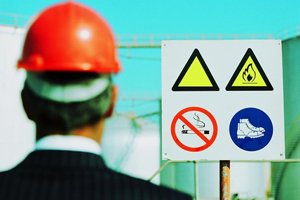
The Occupational Health and Safety Law enacted in 2012 in Turkey was enacted in order to regulate the duties, responsibilities and obligations of the employers and employees in order to provide occupational health and safety at workplaces and to improve the existing health and safety conditions. The provisions of this law shall be applied to all workplaces and all employees without any discrimination between private sector and public. This is the legal dimension of the business. But there are also international regulations.
The BS 8800 Occupational Health and Safety Management System Guide, published by the British Standards Institute in 1996, was the first health and safety standard to serve as a guideline. However, this standard did not form the basis for certification efforts by organizations. Consequently, other organizations also published standards related to occupational health and safety. These standards primarily used the BS 8800 standards, but their content and application methods differed.
To eliminate these discrepancies, a collaborative effort was initiated involving independent auditing firms and certification bodies. The goal was to create an internationally recognized health and safety standard. As a result of these efforts, the OHSAS 18001 Occupational Health and Safety Management System standard was developed in 1999.
In order for organizations to cope with their competitors more easily, their employees need to make more systematic and planned studies on occupational health and safety. The biggest problem of employees is not having a safe and healthy working environment. The International Standards Organization, which focuses on standards such as Quality Management System and Environmental Management System, is insufficient to ensure occupational health and safety. Therefore, OHSAS 18001 standards are required.
This standard, briefly called OHSAS (Occupational Health and Safety Assessment Series) and published by the British Standards Institution, is not an ISO standard. It has been revised twice, in 2004 and 2007. Following the 2007 revision, the standards were made more compatible with ISO 14001 Environmental Management System and ISO 9001 Quality Management System standards.
Today, exceeding customer expectations is crucial for quality. However, customers are no longer solely seeking quality products or services. They are also interested in the social responsibility of the manufacturing companies. Because of this expectation, expressions related to occupational health and safety have begun to appear in classic definitions of quality. Over time, the concept of quality has also come to be questioned in terms of how well organizations comply with legal regulations regarding occupational health and safety, whether they establish a safe and healthy working environment, and how continuously they improve this environment.
OHSAS 18001 standards have been developed to suit every sector. Organizations wishing to implement this system, regardless of their type of activity, can apply occupational health and safety standards systematically and in accordance with their overall strategy. Thanks to these standards, risks related to occupational health and safety are identified, analyzed, and minimized through preventive measures. Compliance with legal regulations is also ensured.
In this way, employees in that organization hear the safety of working in an organization prepared for emergencies, monitoring worker health and work safety performance, initiating improvement work according to the monitoring results, auditing, reviewing and documenting activities and they become a part of the system.
Occupational health and safety refers to the systematic identification of hazards and risks that may harm the health of employees during various tasks in a workplace, for various reasons, and the implementation of adequate measures to prevent these hazards and risks from recurring, in order to protect them and create a better working environment. The entirety of these efforts is called the Occupational Health and Safety Management System.
An average of one third of the working life of a working person is spent in the workplace. The workplaces have various elements, which arise from both the operations performed and the substances used and produced, and which constitute personal health and safety risks. It is important that measures are taken to ensure that workplaces are healthier and safer. In this respect, the OHSAS 18001 Occupational Health and Safety Management System should be considered a way of life.